loading
| Availability: | |
|---|---|
| Quantity: | |
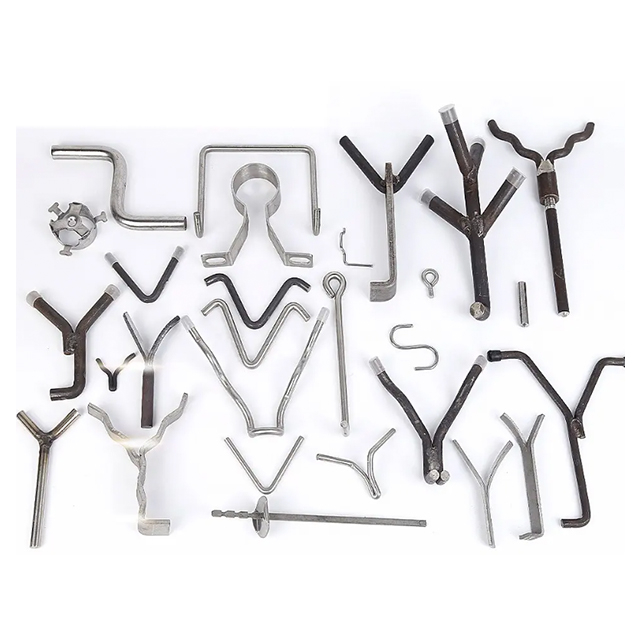
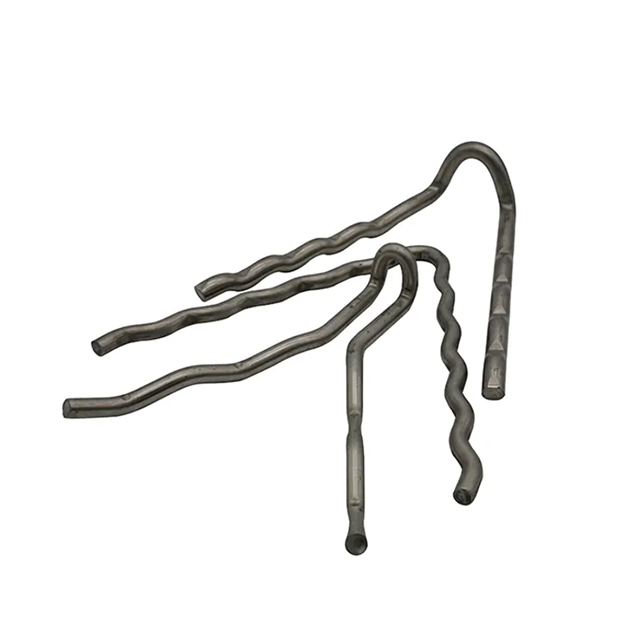
Designed for refractory lining support in furnaces, boilers, chimneys, ducts, and other high-temperature equipment
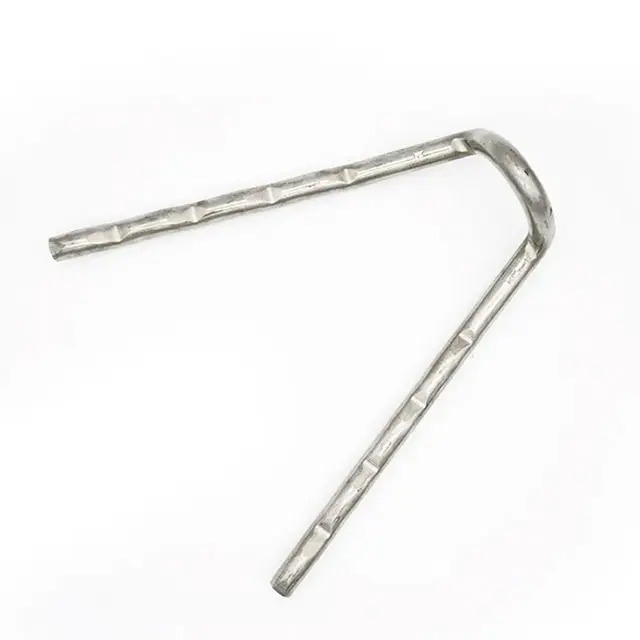
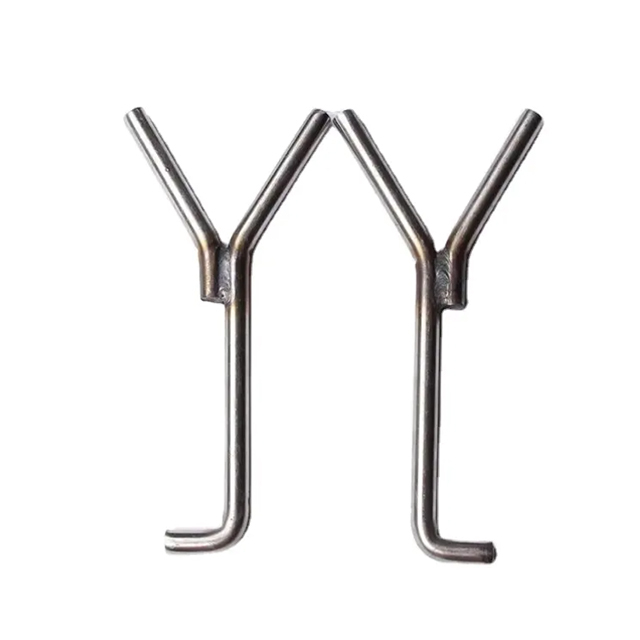
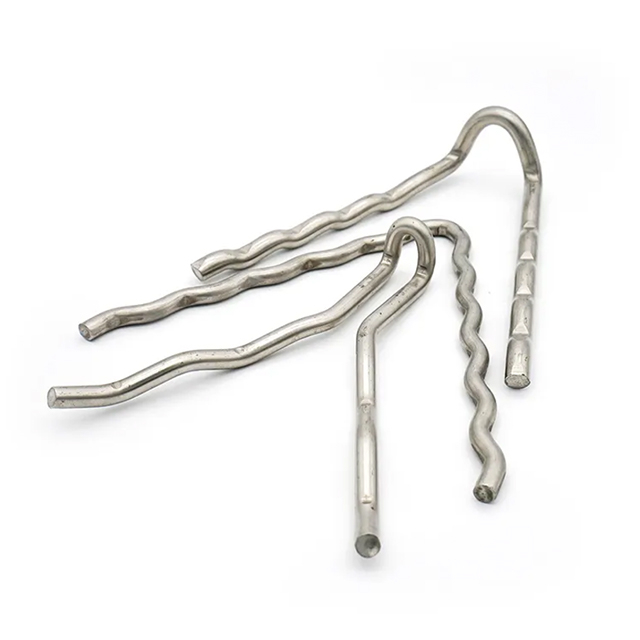
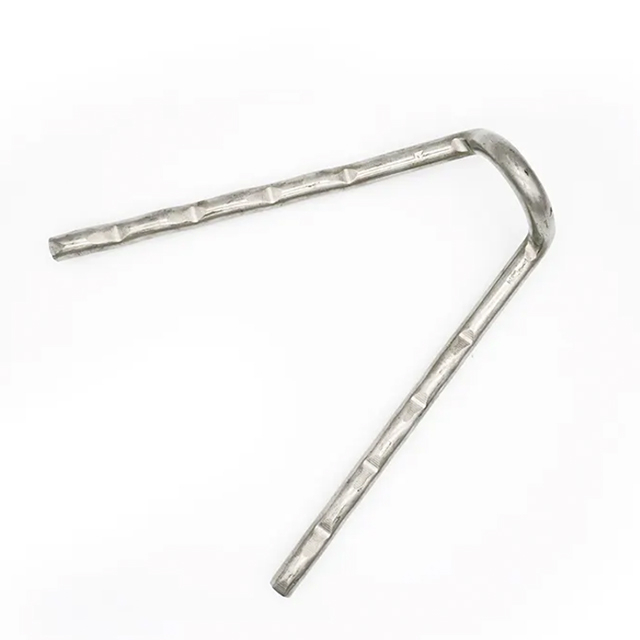
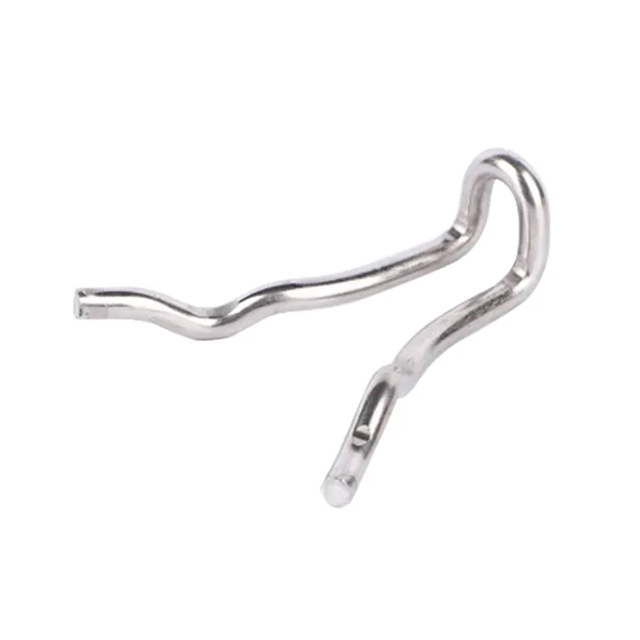
U type and L type anchor forms provide practical support for castable, monolithic, and cement-based refractory systems
Available in 304 and 310 stainless steel, with additional heat-resistant grades available on request
Suitable for projects requiring stable lining retention under thermal stress, vibration, and long operating cycles
Helps reduce refractory movement, edge instability, and localized lining damage
Can be manufactured in customized dimensions based on drawings, lining thickness, and installation layout
A reliable choice for furnace lining systems where anchor geometry directly affects refractory service life
U / L Type Refractory Anchor is a formed heat-resistant metal support component used to secure refractory lining systems to the shell or structural surface of high-temperature equipment. Although small in size compared with the full lining structure, the anchor plays a decisive role in how the refractory behaves during heating, cooling, vibration, and long-term service exposure. A refractory lining is only as reliable as the anchoring system behind it. Even high-grade castables can fail prematurely if the anchor form, material grade, or layout is not correctly matched to the application.
The U type anchor is valued for its stable geometry and relatively even force distribution. It is especially useful where lining support must be spread more evenly across vertical surfaces or thermal wall sections. This reduces local stress concentration and helps maintain refractory integrity over time. The L type anchor, by contrast, is often used where directional support, corner reinforcement, or local structural holding is more important. It provides a practical solution in areas where installation space, geometry, or edge conditions require a more targeted support form.
For users operating boilers, furnaces, and similar thermal systems, the benefit is direct. A well-designed U or L anchor system helps keep the refractory in place, reduces the chance of local collapse or separation, and supports more stable maintenance intervals. That means lower repair frequency, better operational continuity, and more dependable lining performance in demanding service conditions.
Item | Specification |
|---|---|
Product Name | U / L Type Refractory Anchor |
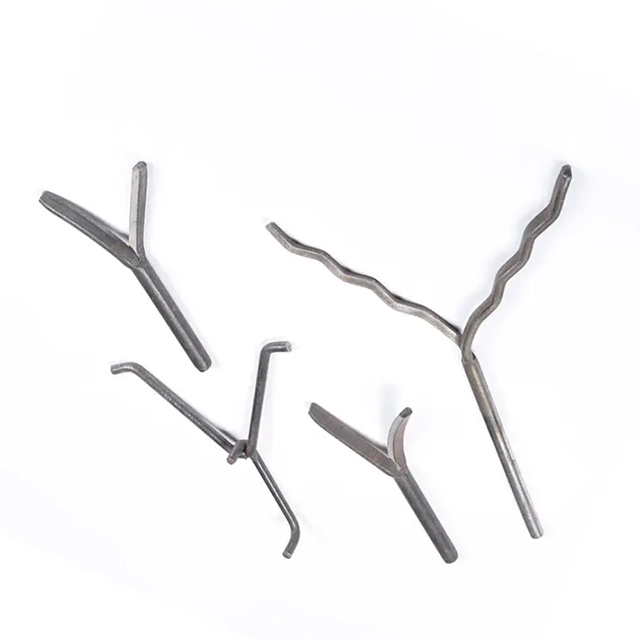
Current Page Reference Name | High Quality 304 310 Stainless Steel U Waved V Y Type Refractory Support Anchor for Furnace Lining |
Product Category | Refractory Support Anchor / Refractory Anchor |
Anchor Types | U Type / L Type |
Main Function | Supporting and securing refractory linings |
Material Options | 304 Stainless Steel, 310 Stainless Steel, customized heat-resistant grades |
Application | Furnace lining, boiler lining, chimney lining, vertical wall lining, refractory support systems |
Service Conditions | Thermal stress, mechanical vibration, static load, long-term heat exposure |
Manufacturing Method | Formed / welded / fabricated / custom made |
Size | Customized |
Custom Manufacturing | Available |
The U type anchor is particularly useful where refractory linings require balanced support across a broader area. Its geometry helps distribute retention force more evenly, which is important in vertical walls, chimney sections, boiler zones, and other lining areas where uneven loading can create weak points.
Key value of U type structure:
reduces localized stress concentration
improves stability in wall-supported refractory sections
helps keep castables and monolithic linings in position over long service periods
supports more uniform anchoring performance in repetitive layouts
The L type anchor is valuable where refractory support must be concentrated in a more specific direction. This is useful near edges, joints, corners, transitions, or layout zones that do not suit a more symmetrical anchor form.
Key value of L type structure:
practical for corner and transition areas
supports directional holding where layout flexibility matters
helps reinforce localized lining areas exposed to movement or separation risk
easier to match to non-standard installation geometry
In refractory systems, anchor performance is not determined by material alone. Shape affects how forces are transmitted into the lining. A correctly chosen U or L anchor reduces structural mismatch between the lining and the steel shell, which can improve refractory retention and reduce early maintenance caused by hidden anchor design issues.
Material selection should always be matched to the actual thermal duty of the lining system. In refractory anchor applications, the main risks include oxidation, scaling, distortion, corrosion, and loss of strength at elevated temperatures. When the wrong material is used, the anchor may weaken before the refractory reaches the end of its intended service life. This often leads to localized lining instability, anchor breakage, or avoidable shutdown for repair.
304 stainless steel: suitable for many standard high-temperature refractory support applications
310 stainless steel: preferred where the operating temperature is higher and oxidation resistance is more critical
maximum operating temperature
thermal cycling frequency
atmosphere composition
corrosion potential
refractory thickness
desired maintenance interval
Since the current page already emphasizes 304 and 310 stainless steel, these grades should remain central to the page positioning. 304 works well in many general lining support scenarios, while 310 offers better high-temperature capability where the anchor is exposed to more severe heat conditions. Matching the correct alloy to the real operating environment helps extend anchor life, improve lining reliability, and reduce the cost of premature replacement.
Refractory anchors are rarely true off-the-shelf components in serious thermal lining work. Even when the anchor type is standard, the actual project usually requires adjustment in height, leg length, angle, diameter, thickness, weld end, or formed geometry. This is especially true for U and L anchors because they are often selected to fit layout-specific support requirements rather than purely generic refractory panels.
line diameter or plate thickness
total height and leg length
bend angle and formed profile
welding end style
anchor spacing guidance
production by drawing or sample
improves fit with actual shell and lining thickness
reduces installation inconsistency on site
helps optimize support in corners, walls, and transition zones
lowers the chance of anchor mismatch causing refractory weakness
A custom-fabricated anchor is not just a dimensional variation. It is an engineering adjustment that helps the anchor perform correctly in the real equipment environment. This is especially important when the system includes mixed anchor forms, different wall thicknesses, or areas exposed to different thermal loads.
U / L Type Refractory Anchors are widely used in high-temperature equipment where lining retention must remain reliable despite repeated heat exposure and mechanical stress. These anchors are especially relevant in systems where the refractory is not only exposed to high temperature but also to structural movement, flue turbulence, or vertical wall loading.
industrial furnaces
boilers
chimneys
vertical refractory walls
flue and duct linings
kilns
petrochemical thermal units
power generation equipment
steel and cement process lines
supports more stable layout in vertical wall applications
helps improve lining retention in edge and transition areas
useful where mixed anchor arrangements are needed across the same equipment
reduces the risk of localized refractory drop caused by poor support geometry
A better-matched U or L anchor can improve overall refractory system stability, reduce premature cracking or detachment, and help maintenance teams achieve more predictable shutdown planning. This makes the anchor not just a support component, but an important contributor to lining reliability and service continuity.
Selecting the correct anchor shape is essential for ensuring stable refractory performance. The choice between U type and L type depends on installation position, load distribution, and lining structure.
Item | U Type Refractory Anchor | L Type Refractory Anchor |
|---|---|---|
Support Style | Balanced and distributed support | Directional and localized support |
Typical Area | Vertical walls, broad lining sections | Edges, corners, transition zones |
Load Behavior | Reduces stress concentration | Reinforces specific points |
Layout | Suitable for regular patterns | Suitable for irregular structures |
Best Use | Uniform support requirement | Local reinforcement requirement |
Choose U Type when:
The lining is installed on large vertical surfaces
Anchor layout needs to be consistent and repeatable
Even load distribution is required across the lining
The goal is to reduce stress concentration in the refractory
Choose L Type when:
Installation is near edges, corners, or transitions
Space is limited or geometry is irregular
Local reinforcement is required
Support needs to be directional rather than symmetrical
We do not treat refractory anchors as generic bent steel parts. We supply anchors according to how they actually function inside furnace and boiler lining systems.
304 and 310 stainless steel options are available to suit different temperature ranges and operating conditions, helping improve durability and thermal reliability.
We support custom dimensions, formed geometry, and drawing-based production to match real project requirements rather than forcing a standard design.
U and L anchors are often selected because the installation area is not simple. We understand the need for anchor forms that fit walls, edges, transitions, and irregular support zones.
Our anchor solutions are intended to help reduce refractory instability, improve retention performance, and support longer service intervals in thermal equipment.
A U type refractory anchor is commonly used to support refractory linings in vertical walls, boilers, chimneys, and furnace sections where more even load distribution is required.
An L type refractory anchor is typically used for directional support, corner areas, edge transitions, and lining sections where a more targeted anchor geometry is needed.
304 stainless steel is suitable for many general high-temperature applications, while 310 stainless steel is a better choice for more severe heat conditions that require stronger oxidation resistance.
Yes. These anchors can be customized by diameter, length, bend angle, leg size, and material grade according to project drawings and refractory design requirements.
They are commonly installed in furnaces, boilers, chimneys, vertical wall linings, ducts, and other high-temperature refractory support systems.