loading
| Availability: | |
|---|---|
| Quantity: | |
The 1Cr18Al3 electrothermal alloy resistance heating wire represents a highly efficient material solution engineered for demanding thermal processing environments. Formulated from a precisely balanced iron-chromium-aluminum (Fe-Cr-Al) base, this wire delivers exceptional electrical resistivity combined with a notably low physical density. By structuring this alloy without relying on scarce and volatile nickel resources, it provides a significant advantage in stabilizing procurement budgets while maintaining strict thermal performance metrics. This cost-efficiency makes it an essential component for large-scale manufacturing operations requiring reliable temperature management without unpredictable material expenses.
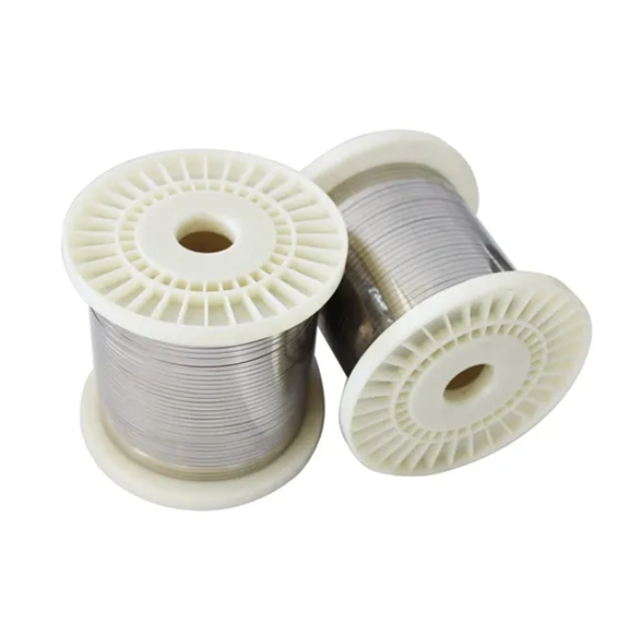
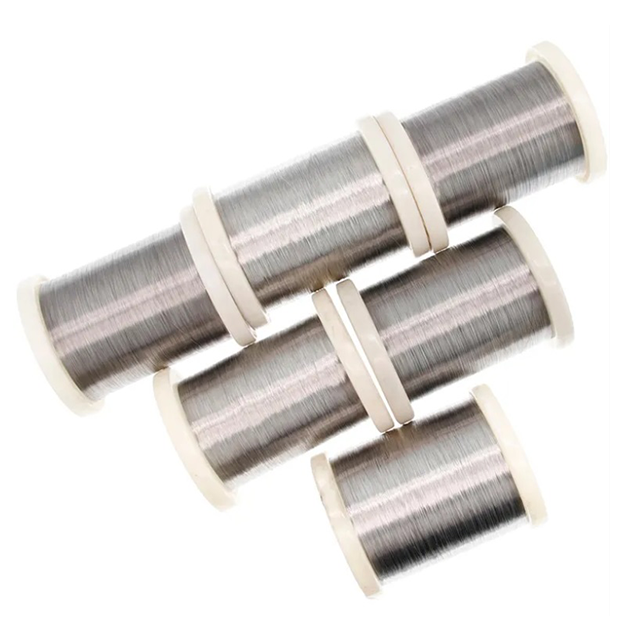
Upon physical inspection, the wire presents a uniform, matte silver-gray finish that feels consistently smooth to the touch. This frictionless surface ensures predictable coiling and shaping during the manufacturing of heating elements. When unspooled, the material emits a faint, metallic resonance—a direct result of its dense, void-free internal grain structure. The wire exhibits a distinct structural rigidity that holds complex geometries securely, yet it remains sufficiently malleable to allow for precise mechanical forming. The exterior lacks any abrasive irregularities, ensuring clean integration into intricate ceramic or metal housings without scratching adjacent components.
Product | No. | Grade |
Fe-Cr | 1 | 1Cr12Al3 |
2 | 1Cr13Al4 | |
3 | 1Cr15Al5 | |
4 | 1Cr18Al3 | |
5 | 0Cr20Al3 | |
6 | 0Cr21Al4 | |
7 | 0Cr23Al5 | |
8 | 0Cr20Al6RE | |
9 | 0Cr25Al5 | |
10 | 0Cr21Al6 | |
11 | 0Cr21Al6Nb | |
12 | 0Cr24Al6RE | |
13 | 0Cr27Al7Mo2 | |
Ni-Cr | 14 | Cr20Ni80 |
15 | Cr20Ni80(Zr) | |
16 | Cr30Ni70 | |
17 | Cr15Ni60 | |
18 | Cr20Ni30 | |
19 | Cr20Ni35 |
Operating under extreme thermal conditions requires materials that will not degrade, warp, or lose their conductive integrity over repeated cycles. The 1Cr18Al3 wire is purposefully engineered to support exceptionally high operating temperatures alongside demanding surface loads.
As electrical current passes through the alloy, the material demonstrates rapid heat generation and superior thermal efficiency. This swift response time ensures that industrial heating cycles reach their target temperatures faster, optimizing energy consumption and improving overall operational output for heavy-duty thermal processing equipment. The heat radiates evenly, eliminating cold spots that could compromise the quality of batch processing.
One of the most critical failure points in heating elements is environmental degradation. When exposed to elevated temperatures, the surface of this Fe-Cr-Al wire naturally develops a dense, microscopic Al2O3 (aluminum oxide) protective film. Visually, the metal takes on a slightly darker, protective hue as this layer forms. This continuous barrier acts as an impenetrable shield against further oxidation. Furthermore, the material exhibits outstanding resistance to carburization and remains highly stable in harsh, sulfur-rich atmospheres—environments that typically destroy standard alloys. This oxide layer not only protects the core metal but also emits a clean thermal signature without the acrid odors often associated with burning off manufacturing oils.
Frequent replacement of heating elements disrupts production schedules and increases maintenance overhead. Due to its stable molecular structure and the self-healing nature of its oxide layer, this alloy delivers a service life that extends two to four times longer than conventional nickel-chromium alternatives when utilized in identical high-temperature atmospheric conditions. This exceptional durability directly translates to fewer equipment shutdowns, reduced consumable expenditure, and a highly predictable maintenance schedule for facility managers.
The unique thermal and physical properties of the 1Cr18Al3 alloy make it a highly adaptable component across multiple demanding sectors, ensuring precise temperature regulation wherever it is deployed.
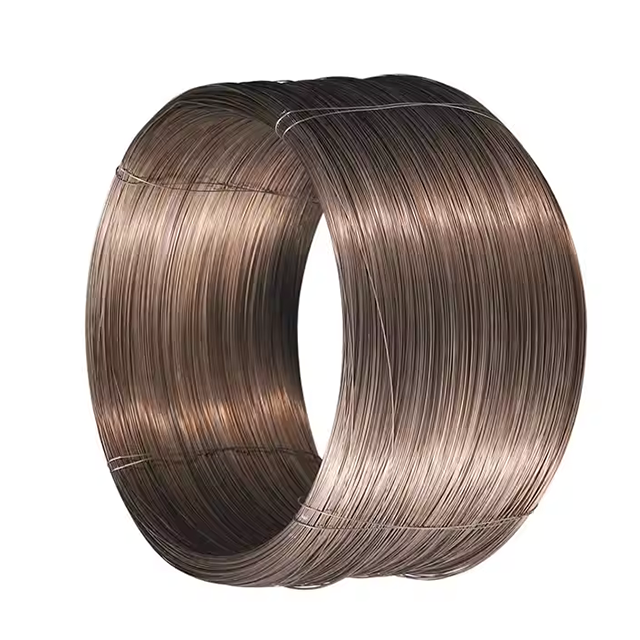
Understanding that no two thermal systems are identical, this resistance wire is available in a comprehensive range of physical dimensions. Facilities can specify materials ranging from ultra-fine wire gauges for delicate instrumentation to thick, flat ribbons and heavy-duty belts for massive industrial applications. The material's inherent ductility allows it to be mechanically processed into complex geometries, including tightly wound spiral heating coils, serpentine configurations, and specialized bayonet heating elements, ensuring an exact fit for existing equipment housings.
Every spool and coil undergoes rigorous testing protocols to ensure absolute consistency before deployment. Advanced manufacturing techniques guarantee that the electrical resistance remains uniform across the entire length of the wire, preventing localized hot spots that lead to premature failure. Tensile strength is carefully monitored to ensure the wire can withstand mechanical tension during winding and installation. The final product is delivered free from surface contaminants, eliminating the risk of outgassing, sparking, or particle shedding when first brought up to operating temperature.