loading
| Availability: | |
|---|---|
| Quantity: | |
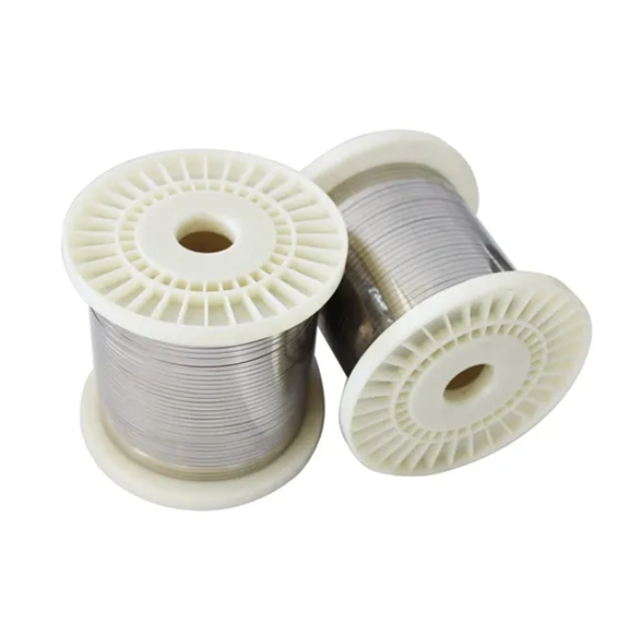
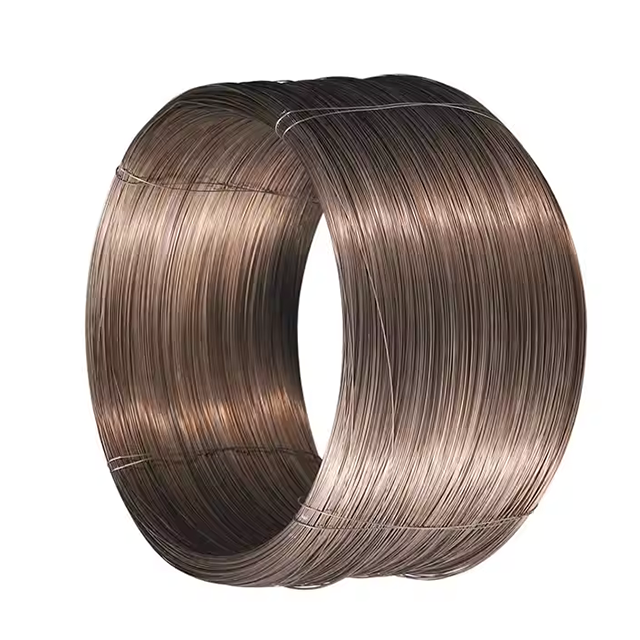
The 1Cr12Al3 Fe-Cr type electrothermal alloy resistance heating wire represents a pinnacle in metallurgical engineering, specifically formulated for demanding thermal applications. Crafted from a meticulously balanced Iron-Chromium-Aluminum (Fe-Cr-Al) base, this alloy is engineered to deliver exceptional oxidation resistance even when exposed to extreme elevated temperatures. The precise addition of aluminum facilitates the formation of a dense, self-healing alumina oxide film on the wire's surface when heated. This protective barrier prevents further internal oxidation and significantly enhances the material's longevity. Upon physical inspection, the wire exhibits a consistently smooth, uniform metallic finish—a direct result of meticulous refinement processes that eliminate surface impurities. This structural integrity ensures a dependably stable electrical resistivity over long operational periods, preventing the gradual degradation often seen in standard heating elements. By maintaining consistent performance, this material significantly reduces the frequency of element replacements, thereby minimizing operational downtime and maintenance expenditures for industrial facilities.
The following table details the specific grade classifications available within our electrothermal alloy portfolio, encompassing both Iron-Chromium (Fe-Cr) and Nickel-Chromium (Ni-Cr) categories. Each grade is formulated with precise elemental ratios to meet distinct thermal and electrical requirements across diverse industrial applications.
Product | No. | Grade |
Fe-Cr | 1 | 1Cr12Al3 |
2 | 1Cr13Al4 | |
3 | 1Cr15Al5 | |
4 | 1Cr18Al3 | |
5 | 0Cr20Al3 | |
6 | 0Cr21Al4 | |
7 | 0Cr23Al5 | |
8 | 0Cr20Al6RE | |
9 | 0Cr25Al5 | |
10 | 0Cr21Al6 | |
11 | 0Cr21Al6Nb | |
12 | 0Cr24Al6RE | |
13 | 0Cr27Al7Mo2 | |
Ni-Cr | 14 | Cr20Ni80 |
15 | Cr20Ni80(Zr) | |
16 | Cr30Ni70 | |
17 | Cr15Ni60 | |
18 | Cr20Ni30 | |
19 | Cr20Ni35 |
When subjected to intense operational environments, the 1Cr12Al3 alloy demonstrates remarkable thermal endurance. It possesses an impressive high-temperature limit combined with the ability to facilitate rapid heat-up cycles. During continuous thermal cycling—where materials repeatedly expand and contract—this heating wire exhibits profound resistance to thermal shock. It maintains its structural cohesion without snapping, warping, or experiencing severe grain growth. This translates to an ultra-long operational lifespan, providing reliable, continuous heat generation even under the most punishing continuous-duty conditions.
The manufacturing process relies on advanced cold drawing techniques followed by precisely controlled annealing. This rigorous methodology guarantees extremely tight dimensional tolerances across the wire's diameter, ensuring uniform heat distribution along every inch of the element. Depending on the specific fabrication requirements, the wire is supplied with either a sleek, bright annealed finish or a pre-oxidized surface. The bright finish offers a smooth, clean tactile feel ideal for intricate forming, while the pre-oxidized variant features a micro-textured, protective dark layer that enhances insulation and extends life in corrosive atmospheres.
Recognizing that heating element designs vary wildly across different sectors, this Fe-Cr-Al alloy offers extensive customization flexibility. Beyond standard round wire profiles, it can be precision-rolled into flat ribbons or woven into dense mesh structures. Wire diameters, cross-sectional areas, and specific resistance parameters are meticulously adjusted to align exactly with detailed engineering blueprints. This adaptability makes the alloy a core component across numerous demanding applications:
Every spool of electrothermal alloy wire undergoes rigorous evaluation to ensure absolute reliability. Operations strictly adhere to ISO quality management frameworks and RoHS environmental directives. Before any material is cleared for dispatch, it is subjected to 100% testing for electrical resistance uniformity and mechanical tensile strength. This guarantees that every segment of wire will perform exactly as specified, eliminating cold spots or premature breakage during operation. The tactile strength of the wire is verified through rigorous stress tests, ensuring it can withstand significant mechanical tension during the element winding process without yielding.
To preserve this engineered perfection during transit, the wire is secured using professional moisture-proof spooling or carefully tensioned coil packaging. This specialized packaging acts as a formidable barrier against atmospheric moisture, preventing any surface oxidation while in transit or storage. Furthermore, the precise winding technique eliminates tangles, kinks, or mechanical damage. When the spools arrive at the fabrication facility, they feed perfectly into automated winding machinery, preventing jams and ensuring uninterrupted, highly efficient production runs.