
Views: 0 Author: Site Editor Publish Time: 2025-09-22 Origin: Site
Are you curious about how refractory anchors are revolutionizing high-temperature industries in 2025? These essential components ensure stability in furnaces and reactors. In this post, you'll learn about the latest trends and innovations in refractory anchor technology, their critical role in extreme environments, and how they've evolved to meet demanding industrial needs.
In 2025, refractory anchors continue to benefit from breakthroughs in advanced material alloys, significantly improving their performance in extreme environments. These anchors, essential for securing refractory linings in furnaces, kilns, and reactors, now often utilize high-nickel alloys and chromium-based materials to withstand severe thermal and mechanical stresses.
High-nickel alloys are prized in refractory anchor technology for their exceptional resistance to high temperatures and corrosion. These alloys maintain structural integrity at temperatures exceeding 1400°C, making them ideal for demanding applications in steel manufacturing and petrochemical plants. Many refractory anchors types, including castable anchors and stainless steel refractory anchors, incorporate high-nickel content to enhance durability. Manufacturers such as Jayne refractory anchors and Malco refractory anchors have adopted these alloys to extend product lifespan and reduce maintenance frequency.
Chromium-based materials add another layer of protection against oxidation and wear. Their inclusion in refractory anchors improves resistance to thermal shock and chemical attack, critical in aggressive industrial settings. Refractory v anchors and ceramic fiber anchors often benefit from chromium-enhanced alloys, combining strength with flexibility. Hanlock refractory anchors, known for their reliability, have integrated chromium components to meet rigorous operational demands.
The integration of these advanced alloys directly impacts the durability and longevity of refractory anchors. Enhanced material properties translate to fewer replacements and lower downtime, crucial for industries relying on continuous high-temperature operations. For example, stainless steel refractory anchors made with these alloys offer superior creep resistance and mechanical strength, ensuring secure refractory linings over extended periods. This advancement aligns with sustainability goals by reducing waste and resource consumption.
| Material Alloy | Key Benefits | Common Applications |
|---|---|---|
| High-Nickel Alloys | High-temperature resistance, corrosion resistance | Steel industry, petrochemical plants |
| Chromium-Based Materials | Oxidation resistance, thermal shock resistance | Cement kilns, glass manufacturing |
| Stainless Steel Alloys | Mechanical strength, durability | Castable anchors, modular systems |
Leading refractory anchor manufacturers are continuously refining alloy compositions to optimize performance. Custom solutions often blend these materials to meet specific operational challenges, ensuring that refractory anchors are not only robust but also tailored for unique industrial needs.
Tip: When selecting refractory anchors, prioritize those made from high-nickel or chromium-based alloys to maximize lifespan and reduce maintenance costs in high-temperature applications.

In 2025, customization and precision manufacturing remain pivotal in advancing refractory anchors technology. CNC machining plays a crucial role by enabling manufacturers to produce refractory anchors with exact specifications. This precision is vital for various refractory anchors types, such as castable anchors and refractory v anchors, which require tight dimensional tolerances to fit perfectly within complex refractory linings. Manufacturers like Jayne refractory anchors and Malco refractory anchors leverage CNC technology to ensure consistency and reduce material waste during production. CNC machining also allows for intricate anchor geometries that enhance mechanical stability and thermal performance.
3D modeling has transformed the design process for refractory anchors by providing detailed visualizations before manufacturing. This technology enables engineers to simulate thermal expansion, mechanical stress, and installation scenarios, ensuring the design meets operational demands. Ceramic fiber anchors and ceramic anchors refractory benefit significantly from 3D modeling, as these materials require careful handling to maintain integrity. By using 3D models, refractory anchor manufacturers can optimize anchor shapes and sizes, improving installation efficiency and reducing the risk of failure. Hanlock refractory anchors, for example, utilize 3D modeling to tailor products to client specifications, enhancing overall system reliability.
Rapid prototyping accelerates the innovation cycle for refractory anchors by allowing quick production of test models. This approach helps refractory anchor manufacturers validate new designs and materials before full-scale production. It is particularly useful when developing custom solutions for challenging environments, such as high-corrosion areas where stainless steel refractory anchors are preferred. Rapid prototyping supports iterative improvements, saving time and costs while increasing product effectiveness. By embracing this method, companies can respond swiftly to market demands and deliver innovative refractory anchors that address unique industrial challenges.
Tip: Collaborate closely with refractory anchor manufacturers that use CNC machining and 3D modeling to ensure custom anchors perfectly fit your high-temperature applications, minimizing downtime and maximizing durability.
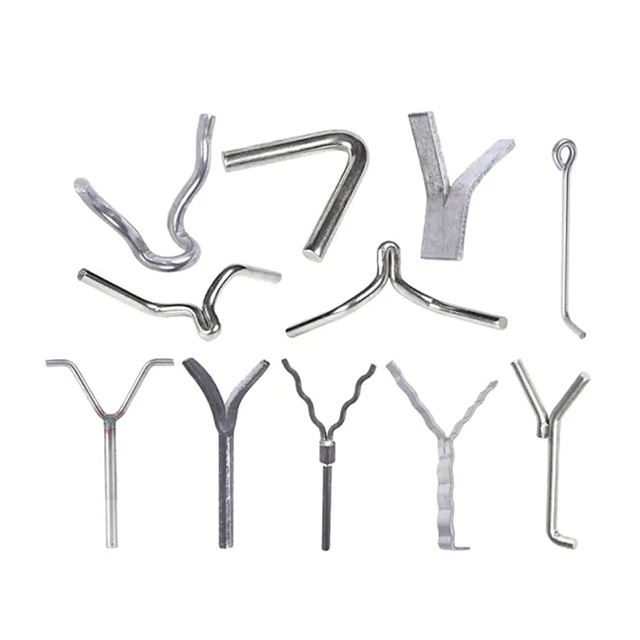
In 2025, refractory anchors are evolving with flexible configurations that adapt to the dynamic stresses of high-temperature environments. Unlike traditional rigid anchors, these flexible designs accommodate thermal expansion and contraction without compromising the refractory lining’s integrity. For example, refractory v anchors and spiral anchors now incorporate joints or bends that allow slight movement, reducing cracking and displacement. Manufacturers like Jayne refractory anchors and Hanlock refractory anchors have introduced such flexible configurations, which are especially beneficial in steel furnaces and petrochemical reactors where temperature fluctuations are frequent.
Thermal shock resistance remains a critical design focus for refractory anchors. Rapid temperature changes can cause severe stress, leading to premature failure of anchors and refractory linings. Innovations in anchor geometry and material combinations help mitigate this risk. Ceramic fiber anchors and ceramic anchors refractory, for instance, are designed with materials that absorb and dissipate thermal energy more effectively. This reduces stress concentration and enhances the anchor’s lifespan. Malco refractory anchors have developed proprietary designs that improve thermal shock resistance by optimizing anchor thickness and surface profiles, ensuring durability in demanding applications like glass manufacturing and cement kilns.
Modular anchor systems are gaining traction due to their ease of installation and maintenance. These systems consist of interchangeable components that can be quickly assembled or replaced onsite, minimizing downtime during repairs. Castable anchors are often part of modular assemblies, allowing customization based on lining thickness and operating conditions. Leading refractory anchor manufacturers now offer modular solutions that integrate stainless steel refractory anchors for strength and corrosion resistance. This approach streamlines inventory management and reduces installation complexity, benefiting industries with tight operational schedules.
Tip: When selecting refractory anchors, consider flexible and modular designs to enhance thermal shock resistance and simplify maintenance, especially in facilities with frequent temperature cycling.
In 2025, the refractory anchor industry is embracing Industry 4.0 principles, transforming traditional manufacturing into a digitally connected ecosystem. Refractory anchor manufacturers are integrating smart factories equipped with IoT devices and advanced data analytics. This digital shift allows real-time tracking of production stages, material usage, and quality control, ensuring each refractory anchor meets precise specifications. Companies like Jayne refractory anchors and Hanlock refractory anchors are investing heavily in automation and digital workflows to optimize efficiency and reduce lead times.
Digital twins, virtual replicas of physical refractory anchors, enable engineers to simulate performance under extreme conditions before production. This reduces costly errors and accelerates innovation. For example, refractory v anchors and castable anchors benefit from these simulations by optimizing designs for thermal expansion and mechanical stress. Such digital integration ensures products are not only high-quality but also tailored to specific industrial needs.
The integration of smart monitoring systems into refractory anchors marks a significant leap forward. Sensors embedded within stainless steel refractory anchors or ceramic fiber anchors provide continuous data on temperature, stress, and potential wear. This data is invaluable for operators managing high-temperature equipment in steel plants, cement kilns, and petrochemical reactors.
These smart anchors help detect early signs of failure, such as corrosion or fatigue, allowing timely interventions. Manufacturers like Malco refractory anchors have developed proprietary sensor technologies that withstand harsh environments while delivering accurate real-time insights. This proactive monitoring enhances safety and prevents unexpected downtime, saving costs and improving operational reliability.
Predictive maintenance, powered by data from smart monitoring systems, is revolutionizing how refractory anchors are maintained. Instead of relying on fixed schedules or reactive repairs, industrial operators use predictive analytics to forecast anchor lifespan and maintenance needs. This approach minimizes unplanned shutdowns and extends refractory lining life.
By analyzing trends from sensor data, operators can identify anchors at risk of failure and plan replacements during scheduled maintenance windows. This is particularly beneficial for complex installations using modular anchor systems or custom refractory anchors, where downtime is costly. Jayne refractory anchors and Hanlock refractory anchors have incorporated predictive maintenance services, helping clients optimize asset management and reduce lifecycle costs.
Tip: Collaborate with refractory anchor manufacturers that offer smart monitoring and predictive maintenance solutions to enhance operational efficiency and extend the lifespan of your refractory linings.
In 2025, the refractory anchors industry is increasingly adopting eco-friendly materials to reduce environmental impact. Manufacturers are exploring recycled metals and low-carbon alloys, which maintain the strength and thermal resistance needed for high-temperature applications. For example, stainless steel refractory anchors and ceramic fiber anchors are now often produced using recycled content without compromising quality. Leading refractory anchor manufacturers like Hanlock refractory anchors and Jayne refractory anchors prioritize sustainable sourcing to align with global green initiatives. These eco-friendly materials help lower the carbon footprint of industrial operations, meeting stricter environmental regulations.
Energy-efficient manufacturing techniques are becoming standard in refractory anchor production. Processes such as electric arc furnaces and induction heating reduce energy consumption compared to traditional methods. Additionally, automation and precision manufacturing minimize waste by optimizing material use. Castable anchor production benefits from these innovations, as precise alloy melting and forming reduce excess energy use. Malco refractory anchors have incorporated such techniques to improve sustainability while maintaining product durability. These energy-saving methods not only cut costs but also support corporate social responsibility goals in heavy industries.
The shift toward sustainability in refractory anchor technology reflects broader industrial trends. Companies are setting ambitious targets to reduce greenhouse gas emissions and resource consumption. By integrating eco-friendly materials and energy-efficient processes, refractory anchor manufacturers contribute to these goals. Moreover, modular anchor systems facilitate easier maintenance and replacement, reducing waste over the product lifecycle. Refractory v anchors and ceramic anchors refractory designed for longevity also support sustainability by extending service intervals. This alignment with sustainability enhances brand reputation and meets growing customer demand for responsible industrial solutions.
Tip: When selecting refractory anchors, prioritize products from manufacturers that use eco-friendly materials and energy-efficient processes to support your sustainability objectives and reduce operational costs.
The future of refractory anchors in 2025 and beyond lies in the seamless integration of cutting-edge material science with digital technologies. Advances in alloy formulations, such as high-nickel and chromium-based materials, will continue to enhance anchor durability. Simultaneously, digital tools like 3D modeling and CNC machining enable precise customization, ensuring each refractory anchor fits its specific application perfectly. This convergence allows manufacturers, including leading refractory anchor manufacturers like Jayne refractory anchors, Hanlock refractory anchors, and Malco refractory anchors, to produce highly specialized anchors that meet the increasingly complex demands of high-temperature industries.
Digitalization also facilitates smarter manufacturing processes. By leveraging data analytics and real-time monitoring, companies can optimize material usage and reduce waste. This synergy between materials and digitalization not only improves product performance but also supports sustainability goals by minimizing the environmental footprint of refractory anchor production.
Artificial Intelligence (AI) is set to revolutionize refractory anchor design. AI algorithms analyze vast datasets from field performance, material properties, and thermal stress patterns to create optimized anchor geometries and compositions. This results in refractory anchors that are more resilient to thermal shock and mechanical wear.
For example, AI can help develop novel refractory anchors types, such as enhanced castable anchors or ceramic fiber anchors, by predicting failure points and suggesting design modifications before physical prototyping. Manufacturers like Jayne refractory anchors and Hanlock refractory anchors are already exploring AI-driven design tools to accelerate innovation and reduce time-to-market.
AI also enables rapid customization, allowing manufacturers to tailor stainless steel refractory anchors or refractory v anchors to specific operational environments quickly. This agility supports industries with diverse and evolving requirements, such as petrochemical plants and steel manufacturing.
The demand for specialized refractory anchors will continue to grow as industrial processes become more complex. Modular anchor systems, which simplify installation and maintenance, will gain wider adoption. These systems allow for easy replacement of individual components, reducing downtime and costs.
Efficient anchor systems will also incorporate smart monitoring capabilities. Embedding sensors within refractory anchors provides real-time data on temperature, stress, and corrosion. This information supports predictive maintenance, helping operators avoid unexpected failures and extend service life.
Companies like Malco refractory anchors are pioneering such smart anchor technologies, combining material innovation with digital intelligence. These specialized systems improve safety, reliability, and operational efficiency across sectors like cement, glass, and power generation.
Tip: To stay competitive, partner with refractory anchor manufacturers that integrate advanced materials, AI-driven design, and smart monitoring to deliver customized, durable, and efficient anchor solutions tailored for your high-temperature applications.
In 2025, refractory anchor technology showcases key innovations such as advanced material alloys, CNC machining, and smart monitoring systems. These advancements enhance durability and efficiency, offering significant benefits for high-temperature industrial applications. As industries evolve, the focus shifts towards eco-friendly materials and AI-driven design to meet sustainability goals. Companies like Leader Special Steel are at the forefront, providing customized solutions that integrate cutting-edge materials and digital technologies, ensuring superior performance and value for their clients.
A: In 2025, refractory anchors are evolving with advanced material alloys like high-nickel and chromium-based materials, enhancing durability and thermal resistance. Innovations include flexible configurations, smart monitoring systems, and eco-friendly manufacturing practices.
A: Refractory anchor manufacturers are integrating Industry 4.0 technologies, such as CNC machining and 3D modeling, to enhance precision and customization. Smart monitoring systems provide real-time data, supporting predictive maintenance and improving operational efficiency.
A: High-nickel alloys are used in refractory anchors for their exceptional resistance to high temperatures and corrosion, making them ideal for demanding applications in steel manufacturing and petrochemical plants.
A: Modular anchor systems simplify installation and maintenance by allowing quick assembly and replacement of components. They reduce downtime and costs, making them beneficial for industries with tight operational schedules.
A: Manufacturers are adopting eco-friendly materials and energy-efficient processes to reduce environmental impact. Recycled metals and low-carbon alloys are used without compromising quality, aligning with global sustainability goals.


