
Views: 0 Author: Site Editor Publish Time: 2026-02-05 Origin: Site
Why do refractory linings fail sooner than expected? A Refractory Anchor often makes the difference. In this article, we explore how Refractory Anchor systems work, where they’re used, and what value they bring. You’ll learn practical applications, core benefits, and how Leader Special Steel supports reliable high-temperature solutions.
A Refractory Anchor is a stainless steel fastening component used to secure refractory bricks, castables, or ceramic linings to furnace and boiler shells. It stays hidden inside the lining, but it directly controls how that lining performs once temperatures rise.
In most installations, anchors are fixed to the steel wall first. Refractory material is then applied around them. As heat builds, they allow slight expansion while preventing the lining from sliding or collapsing. Manufacturers such as Leader Special Steel provide anchors in heat-resistant grades like 304 and 310S, plus V, Y, W, and waved shapes for different lining systems.
Inside operating equipment, a Refractory Anchor does more than just “hold” material. It stabilizes linings during heating and cooling, spreads refractory weight across the wall, and helps keep hot gases or molten material centered inside the chamber.
Anchors cooperate with the refractory body to reduce cracking and preserve insulation thickness. During inspections or relining, they also act as fixing points for tools, making maintenance more practical.
In daily operation, they quietly support:
● even load distribution across the lining, which limits local stress,
● stable internal geometry that helps maintain thermal efficiency,
● reduced vibration movement that can loosen refractory over time.
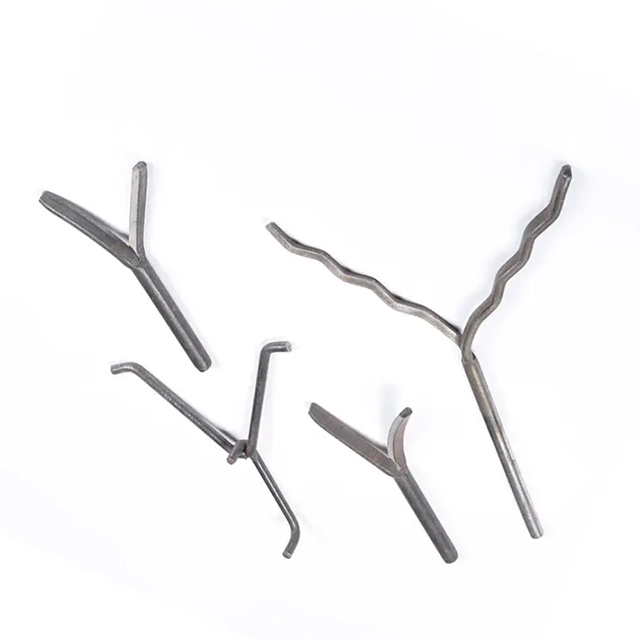
In real-world installations, a Refractory Anchor is fixed to the steel shell first. Then refractory castables, bricks, or fiber modules are applied around it. Once equipment heats up, the anchor keeps the lining in position while allowing controlled expansion. This simple structure supports refractory systems across furnaces, kilns, boilers, and reactors.
You’ll typically find refractory anchors working inside:
● furnaces and heat-treatment chambers, where rapid temperature swings occur,
● cement and lime kilns, where wall stability affects daily output,
● boilers and incinerators, where insulation protects the pressure shell,
● power generation and petrochemical units, where heat meets corrosion.
Common application scenarios:
Equipment | Anchor Purpose | On-Site Benefit |
Industrial furnaces | Secure castables and bricks | Prevent lining slippage |
Cement kilns | Support refractory walls | Reduce structural movement |
Boilers & reactors | Fix insulation layers | Protect steel shells |
Manufacturers such as Leader Special Steel supply anchors in multiple stainless grades and shapes, allowing operators to match each anchor to its operating zone instead of forcing one design everywhere.
Beyond fastening, refractory anchors quietly carry the self-weight of refractory materials. They spread loads across the lining surface, helping avoid stress concentration. Over time, this limits cracking, sagging, and premature lining failure.
Inside working units, anchors also help refractory blocks stay exactly where engineers place them, even during vibration or thermal cycling. That stability reduces hot spots and keeps maintenance predictable.
In daily operation, they support:
● even load sharing across walls and ceilings,
● reduced mechanical stress at joints and corners,
● stable block positioning during production and servicing.
This structural role often determines whether a lining lasts months or several years.
A properly installed Refractory Anchor also protects thermal performance. By holding insulation at the designed thickness, it limits heat leakage and helps maintain steady internal temperatures.
When linings remain tight against the shell, furnaces heat more evenly and boilers retain energy longer. Over long production runs, this improves fuel efficiency and process control.
Operators usually notice:
● more consistent chamber temperatures,
● less heat loss caused by displaced linings,
● smoother operation during continuous firing.
These gains start with small anchors doing steady work behind the refractory wall.
Refractory anchors also simplify maintenance. They act as fixing points for tools and inspection equipment, giving crews better access during repairs or lining upgrades. In many systems, they help keep heat-transfer surfaces aligned, which supports predictable internal flow.
From a service standpoint, anchors enable:
● faster inspections during shutdowns,
● partial relining instead of full wall removal,
● easier alignment checks after repairs.
In most furnace projects, the Refractory Anchor shape comes first. Each profile handles heat and load differently, so engineers match shape to lining type instead of guessing.
On site, teams usually work with four core designs:
● V-type anchors for general castable linings, simple and easy to space. They offer balanced strength for most furnace walls.
● Y-type anchors for heavier refractory loads, where deeper support matters. They grip thick linings better.
● W-type anchors in strong thermal cycling zones, helping absorb repeated expansion and contraction.
● U or waved anchors for fiber or modular systems, where flexibility helps during installation.
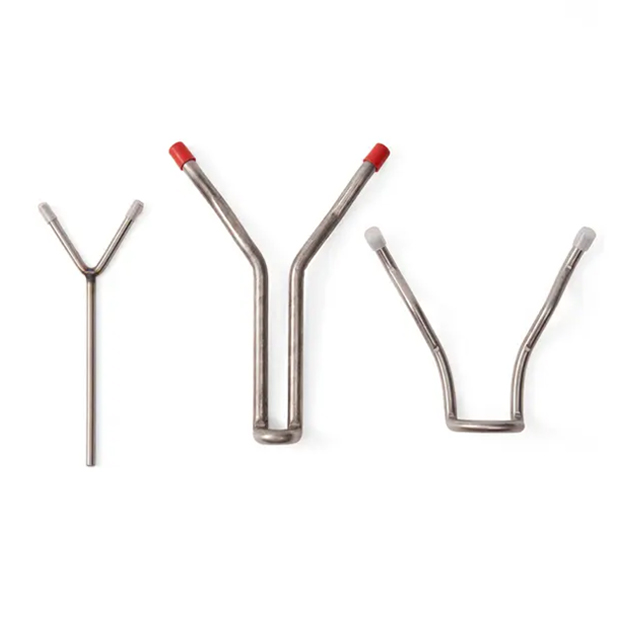
Construction style also matters. Monolithic anchors come as single pieces and are fixed into existing steel shells or hard surfaces. Crews often drill pilot holes first, then install them for permanent cast-in-place linings.
Modular anchors arrive in parts. Teams assemble them on site, which helps in tight spaces or complex furnace layouts. They also simplify partial replacement during maintenance.
In daily projects, engineers usually decide like this:
● monolithic anchors for permanent refractory walls, where speed matters,
● modular anchors for segmented linings or upgrades, where access is limited,
● mixed setups when different furnace zones need different fixing methods.
Material choice controls how long a Refractory Anchor lasts. Moderate heat zones often use 304 stainless steel. Hotter areas move to 310S. Aggressive atmospheres may need oxidation-resistant alloys.
Plants usually follow a simple rule: match alloy to temperature first, then adjust for corrosion risk. This keeps costs reasonable while protecting critical hot spots.
Common selections include:
● 304 stainless steel for mid-range furnace walls, where corrosion is mild,
● 310S stainless steel for burners and high-heat chambers, where strength matters,
● heat-resistant alloys for dusty or chemically aggressive environments.
Anchor design must follow the lining. Firebrick systems prefer rigid anchors that hold blocks in place. Cast-in-place refractory concrete needs shapes that spread load evenly. Ceramic fiber modules work better with lighter, waved designs.
In practice, teams plan anchor layouts around:
● brick patterns in traditional walls,
● thickness and weight of castable layers,
● attachment points for fiber modules,
● curves and corners in custom furnace geometries.
When selecting a Refractory Anchor, most buyers start by looking at operating conditions. Heat level comes first. Then they check lining weight, corrosion risk, and how the anchor will be installed. These basics decide whether an anchor lasts years—or fails early.
In real projects, engineers usually balance:
● maximum operating temperature, so the anchor keeps strength under heat,
● lining thickness and total load, which decide anchor size and spacing,
● exposure to corrosive gases or molten materials, which affects alloy choice,
● installation method, welded or drilled, plus spacing between anchors.
A simple way teams evaluate anchors:
Selection Factor | Why It Matters |
Temperature | Controls material grade |
Lining weight | Defines anchor strength |
Corrosion | Impacts service life |
Spacing method | Affects stability |
Suppliers like Leader Special Steel often help customers match anchor type and stainless grade to each furnace zone, instead of using the same anchor everywhere.
Installation details matter just as much as material. Some anchor types need pilot holes before fixing. Others weld directly to the shell. Either way, crews must allow space for thermal expansion, or the lining may crack once the furnace heats up.
During relining, maintenance teams also care about access and tooling. Many stainless steel anchors need only basic tools, which speeds up shutdown work and reduces labor hours.
On site, teams usually plan for:
● expansion clearance to avoid lining stress,
● easy replacement of damaged anchors during relining,
● anchor layouts that don’t block inspection tools,
● simple fixing methods that save time in tight spaces.
These small choices often decide how smooth the next maintenance cycle feels.
When the right Refractory Anchor is installed correctly, plants see practical gains fast. Linings last longer. Heat stays where it belongs. Shutdowns become easier to predict.
Operators usually notice improvements such as:
● longer refractory service life, even in hot zones,
● better thermal efficiency from stable insulation,
● reduced downtime caused by lining failure,
● more predictable maintenance planning across furnaces and boilers.
Refractory Anchors help secure linings, manage heat, and protect furnace structures. They support load distribution, improve thermal efficiency, and simplify maintenance across boilers, kilns, and reactors. With heat-resistant designs and flexible anchor shapes, products from Leader Special Steel deliver long service life and reliable performance.
A: A Refractory Anchor fixes refractory linings to furnace shells, keeping insulation stable under heat.
A: Check temperature, lining weight, corrosion exposure, then match Refractory Anchor shape and material.
A: Proper Refractory Anchor spacing prevents stress buildup and extends refractory service life.
A: No. Quality Refractory Anchor systems reduce relining frequency and lower long-term maintenance cost.
A: A Refractory Anchor helps stop lining collapse, heat loss, and unexpected furnace downtime.


