
Views: 0 Author: Site Editor Publish Time: 2026-02-05 Origin: Site
Why do refractory linings fail earlier than expected in high-temperature systems? The answer often points to the Refractory Anchor hidden beneath the surface. In this article, you will learn how a Refractory Anchor is made, why manufacturing quality matters, and how proper materials and processes support stable, long-lasting furnace linings.
A Refractory Anchor is a metal or ceramic component welded to a steel shell to secure refractory linings or insulation in high-temperature equipment. It works as a hidden support, holding the lining in place while allowing controlled movement during heating and cooling.
In furnaces, kilns, boilers, and ductwork, anchors are embedded inside castables or fiber systems. They must stay stable under heat, vibration, and load, or the lining may fail.Typical roles of a Refractory Anchor include:
● Fixing castable or brick linings firmly to the steel shell.
● Supporting insulation blankets and fiber modules in lightweight systems.
● Distributing stress evenly to reduce cracking and lining collapse.
Manufacturers like design anchors to balance strength and flexibility, so the lining stays secure without being over-restrained.
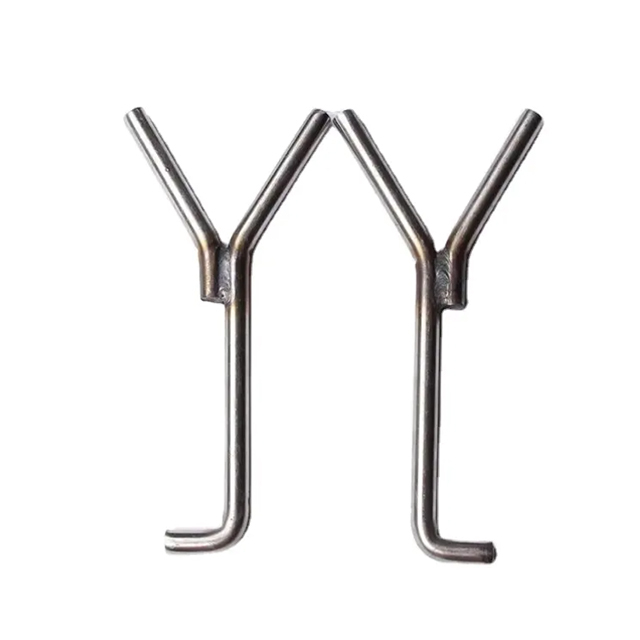
In practice, many refractory lining failures trace back to anchor problems rather than the refractory itself. Poor design or inconsistent manufacturing can cause anchors to deform, oxidize, or break under heat. Once support is lost, the lining begins to crack or detach.
Anchor shape, material, and weld quality all influence how loads move from the lining to the steel shell. Small design flaws can create stress points that grow into major failures during thermal cycling.
Design or Manufacturing Factor | Common Problem Caused | Impact on Lining |
Inadequate material grade | Early oxidation | Shorter service life |
Weak or uneven welding | Anchor detachment | Lining collapse risk |
Improper anchor shape | Poor load transfer | Local cracking |
Inconsistent dimensions | Uneven spacing | Premature wear |
Because of this, buyers often prioritize anchors made with controlled forming and welding processes. Consistent manufacturing helps reduce failure rates, extend lining life, and lower maintenance costs in high-temperature operations.
Most Refractory Anchor systems rely on stainless steel or heat-resistant alloys because they combine strength and oxidation resistance. Grades like 304 and 310 are common in furnaces and kilns, where anchors face repeated thermal cycling. They keep shape under load, resist scale formation, and remain weldable during fabrication.
In practice, these alloys help anchors hold castables and insulation steady while temperatures rise and fall. Manufacturers such as focus on alloy consistency to avoid early deformation or oxidation.
Material Grade | Typical Temperature Range | Key Performance Traits |
304 Stainless Steel | Up to ~900°C | Good strength, corrosion resistance |
310 / 310S Stainless Steel | Up to ~1100°C | Excellent oxidation resistance |
Heat-Resistant Alloys | Above 1100°C | High creep strength, long service life |
Common reasons customers choose metal anchors include:
● They stay mechanically strong under vibration and lining weight.
● They are easy to form into V, Y, or U shapes.
● They integrate smoothly into welded installation systems.
Ceramic Refractory Anchors are used where metal anchors may oxidize or weaken. They perform well in extremely high temperatures or aggressive atmospheres, such as furnaces exposed to corrosive gases. Ceramic anchors do not scale or lose strength from oxidation.
They are often paired with lightweight refractory linings or fiber modules. While they are more brittle than metal anchors, their thermal stability makes them valuable in specific zones where metals struggle.
Choosing the right Refractory Anchor material depends on how the equipment runs day to day. Temperature range sets the baseline, but atmosphere, chemicals, and vibration also matter. An anchor suited for dry heat may fail quickly in a corrosive environment.
This is where experienced manufacturers add value. Teams at Leader Special Steel often help customers review furnace conditions, lining type, and service expectations before recommending materials.Key factors considered during material selection:
● Maximum and continuous operating temperature.
● Exposure to moisture, chemicals, or reactive gases.
● Mechanical load, vibration, and thermal cycling frequency.
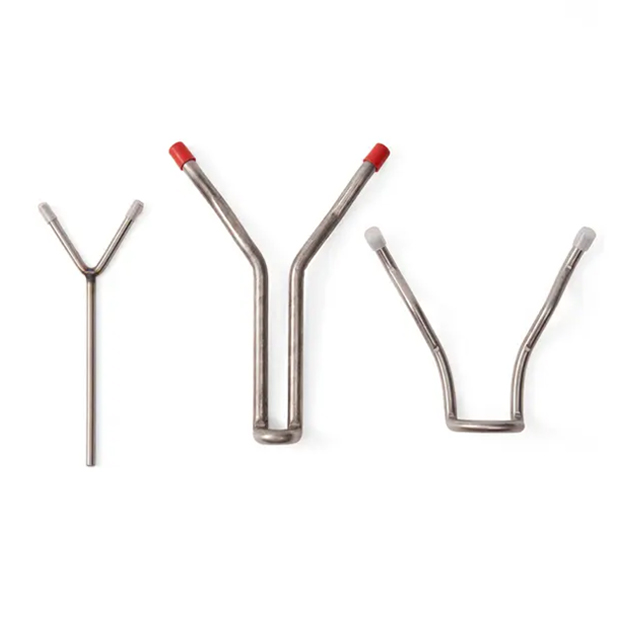
Every Refractory Anchor starts with material selection, since heat exposure defines performance limits. Steel wire, steel rods, or ceramic blanks are chosen based on anchor shape and service temperature. They are cut, cleaned, and straightened before forming begins.
In real production, we look at how the anchor will work inside the lining. It may carry weight, absorb vibration, or sit near the hot face. Manufacturers such as usually confirm material grade early to avoid later deformation or oxidation.
Material preparation focuses on:
● Consistent diameter and surface quality to support accurate forming.
● Clean surfaces to improve welding and bonding with refractory.
● Stable chemistry to ensure predictable behavior at high temperature.
Some Refractory Anchor designs are produced through casting, especially when shapes are complex or ceramic materials are required. Molten metal or ceramic slurry flows into a mold shaped like the anchor. After cooling and solidification, the anchor is removed and trimmed.
This method works well for uniform designs produced in volume. It allows repeatable dimensions and smooth surfaces, which help anchors embed evenly in castable linings during installation.
Casting Step | Purpose | Result |
Mold filling | Shape formation | Consistent anchor geometry |
Controlled cooling | Strength development | Reduced internal stress |
Demolding | Final release | Ready for finishing |
Many metal Refractory Anchors are made through fabrication rather than casting. Steel wire or rod is bent into V, Y, U, or corrugated shapes using tools or machines. Welding joins parts or reinforces stress points.
This approach gives flexibility. It allows custom sizes, special angles, and quick adjustments for different furnace designs. Fabrication also suits smaller batches or tailored projects where anchors must match lining thickness closely.Common fabrication advantages include:
● Easy customization for different anchor lengths.
● Strong welds adapted to mechanical load.
● Faster response for project-specific requirements.
Accurate shaping defines how a Refractory Anchor performs once embedded. If dimensions vary, stress concentrates inside the lining. Bending angles, weld placement, and length control help distribute load evenly.
During production, anchors are checked against drawings to keep spacing and embedment depth consistent. This control helps anchors support the refractory without locking it in place during thermal expansion.Key dimensional checks usually cover:
● Anchor length relative to lining thickness.
● Symmetry of V or Y shapes for even load transfer.
● Weld strength at high-stress points.
Quality checks keep a Refractory Anchor reliable once it disappears inside a hot lining. During production, anchors move through visual checks, dimensional measurement, and weld inspection. They must match drawings, hold shape, and resist early oxidation.
In daily work, inspectors focus on how the anchor behaves under heat and load. If welds crack or dimensions drift, the lining may fail first. This is why manufacturers like build inspection into every production stage.
Typical quality control steps include:
● Checking weld strength and penetration at stress points.
● Verifying material grade and surface condition.
● Measuring length, angle, and symmetry for consistent embedment.
Different Refractory Anchor shapes exist because linings behave differently in each furnace zone. Some areas carry more weight, others face stronger thermal cycling. Shape controls how stress spreads inside the refractory.
By matching anchor geometry to lining type, manufacturers help reduce cracking and extend service life. The goal is support, not restraint.
Anchor Shape | Typical Use | Functional Benefit |
V Anchor | Castable linings | Balanced load transfer |
Y Anchor | High-stress zones | Multi-directional support |
U Anchor | Thick linings | Deeper embedment |
Stud Anchor | Heavy-duty areas | Strong shell attachment |
When sourcing a Refractory Anchor, smart buyers ask questions beyond price. They want to know how anchors are made, tested, and supported in real projects. Clear answers help avoid failures after installation.
Experienced teams welcome these discussions. At Leader Special Steel, engineering support often starts before production, helping customers choose materials and designs that match operating conditions.Useful questions to raise include:
● Which manufacturing method fits my furnace design best?
● What material grade suits my temperature and atmosphere?
● How are welds and dimensions inspected?
● What application experience supports this anchor design?
This article explains how refractory anchors are made and why quality matters.It covers materials, casting, fabrication, and strict inspection steps.A well-made refractory anchor improves lining stability and service life.Leader Special Steel provides reliable refractory anchor solutions and technical support.
A: A Refractory Anchor fixes refractory linings or insulation to steel shells in hot equipment.
A: A Refractory Anchor is made by casting or fabrication, then shaped, welded, and inspected.
A: Poor Refractory Anchor quality can cause lining cracks, sagging, or early failure.
A: A Refractory Anchor uses stainless steel, heat-resistant alloys, or ceramic materials.
A: Match the Refractory Anchor material and design to temperature and operating conditions.


