
Views: 0 Author: Site Editor Publish Time: 2026-02-05 Origin: Site
What keeps cement kilns stable under extreme heat and constant movement is often hidden behind the lining. A Refractory Anchor plays a critical role in whether linings fail early or perform as designed. In this article, you will learn three practical ways Refractory Anchor systems are used in cement plants to stabilize equipment, reduce heat loss, and protect kilns during daily operation.
A Refractory Anchor is a metal component used to secure refractory linings to the steel shell of cement plant equipment. It works as a mechanical connection, holding castable or monolithic refractory in place during operation. Because it sits directly inside high-heat zones, it is designed as a high-temperature anchor, usually made from heat-resistant stainless steel. In practice, the anchor allows the lining to stay stable while still accommodating thermal expansion.
From a customer’s point of view, a refractory anchor is responsible for more than fixing material in place. It supports lining weight, controls movement, and reduces the risk of lining failure during long production runs.
Core Role | What It Does in Cement Plants |
Mechanical fixing | Secures refractory lining to steel shell |
Load support | Carries lining weight without deformation |
Thermal tolerance | Remains stable under high temperatures |
Lining control | Reduces cracking and lining detachment |
Inside cement plants, refractory anchors operate under harsh and continuous stress rather than occasional exposure. Kilns, cyclones, and ducts stay hot for long periods, then cool rapidly during shutdowns, creating strong thermal cycling. At the same time, vibration and material movement constantly act on the lining system.
Common service conditions include:
Service Condition | Effect on Anchor Performance |
High heat | Requires heat-resistant materials |
Thermal cycling | Demands flexibility without cracking |
Vibration | Needs stable geometry and fixing |
Abrasion | Requires firm lining support |
Chemical exposure | Favors corrosion-resistant steel |
In cement plants, a Refractory Anchor plays a direct role in keeping equipment stable during daily operation. Kilns, preheaters, cyclones, calciners, and gas ducts all rely on refractory linings to function correctly, and anchors are what keep those linings in place. They connect the lining to the steel shell so it does not shift, sag, or separate when the system heats up.
When anchors are properly selected, the equipment keeps its designed shape and operating clearances.
Equipment Area | Why Anchors Are Needed |
Rotary kilns | Prevent lining movement during rotation |
Preheaters | Hold linings under constant gas flow |
Cyclones | Maintain lining position under abrasion |
Calciners | Support lining during thermal cycling |
Ducts | Keep linings aligned over long spans |
Refractory linings are heavy, especially when castables are used in thick layers. Stainless steel refractory anchors are designed to carry this weight continuously without bending or breaking. They transfer the load from the lining back to the steel shell, spreading stress across the structure instead of concentrating it in one spot. This helps the lining remain stable over long production campaigns.
In real cement plant conditions, anchors face more than static weight. They deal with vibration, expansion forces, and repeated heating cycles. Good anchor design allows them to hold the lining firmly while still tolerating small movements. This balance is why material quality and anchor design matter as much as size.
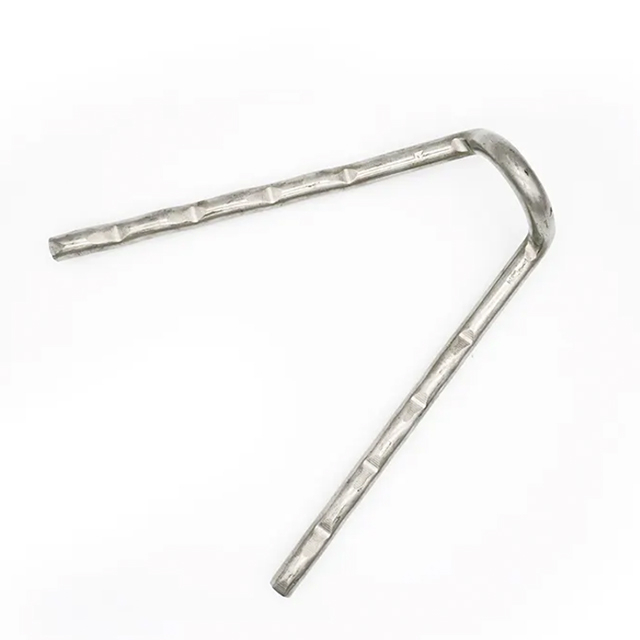
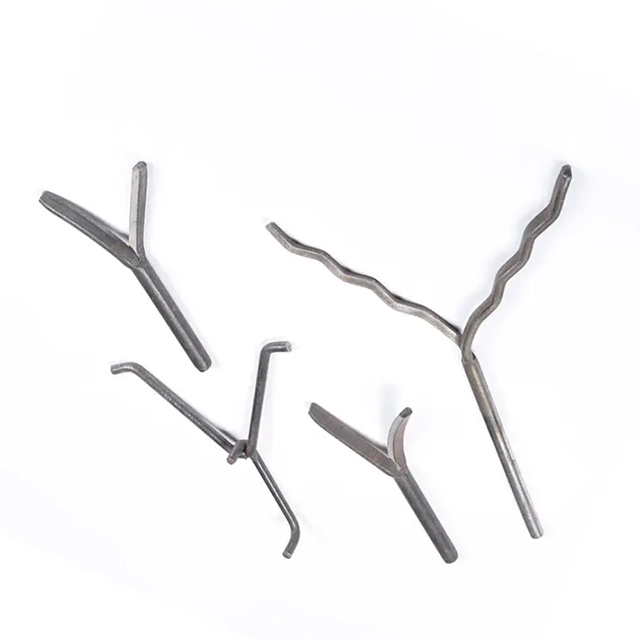
Anchor shape has a direct impact on how well the lining stays in place. Different geometries are used to match different stress patterns inside cement equipment. Each shape controls load, movement, and vibration in a slightly different way, helping improve long-term stability.
Common anchor geometries used in cement plants include:
● V-type anchors, which distribute load evenly in castable linings and handle expansion well over large surfaces.
● Y-type anchors, which provide multi-directional support and resist vibration in dynamic zones.
● U-type anchors, often used where lining thickness and flexibility are both required.
● Waved anchors, designed to absorb thermal movement and reduce stress concentration.
Anchor Shape | Stability Benefit |
V type | Balanced load distribution |
Y type | Strong resistance to vibration |
U type | Flexible support for thick linings |
Waved type | Improved tolerance to thermal movement |
Cement production depends on stable and controlled heat inside kilns and process vessels. When internal temperatures fluctuate, clinker quality suffers and fuel use rises quickly. A Refractory Anchor supports heat retention by keeping refractory linings firmly positioned against the steel shell. When linings stay intact and continuous, the system holds heat where it belongs, inside the process zone.
From an operator’s view, temperature stability means fewer adjustments and fewer surprises. It helps burners run more efficiently. It also keeps the process predictable during long production cycles. Heat retention is not only about insulation quality, but also about how well that insulation stays in place over time.
Process Impact | Why Heat Retention Matters |
Clinker quality | Stable reactions at correct temperatures |
Fuel efficiency | Less heat lost through kiln shell |
Process control | Easier regulation of firing conditions |
Refractory anchors work behind the lining, but their effect on heat transfer is significant. When anchors hold the lining tightly against the shell, they reduce gaps, cracks, and lining movement. These gaps are common paths for heat loss. By limiting lining displacement, anchors help maintain a continuous thermal barrier.
In cement plants, thermal cycling causes linings to expand and contract. Properly designed anchors allow controlled movement instead of separation. This keeps the lining surface even and reduces hot spots on the kiln shell.
When heat loss is reduced, the benefits show up quickly in daily operation. Fuel consumption drops because less energy escapes through the shell. Equipment runs more consistently because internal temperatures remain stable. Over time, this improves overall plant efficiency and lowers operating costs.
From a customer perspective, proper refractory anchor selection supports:
● Lower fuel usage due to improved thermal containment.
● More stable kiln temperatures during long campaigns.
● Reduced shell hot spots and related maintenance issues.
● Improved lining life, which reduces repair frequency.
Operational Benefit | Result for the Plant |
Improved thermal efficiency | Reduced energy consumption |
Stable internal temperature | Consistent product quality |
Fewer hot spots | Lower shell stress and wear |
Longer lining life | Lower maintenance costs |
Inside a rotary kiln, cement clinker moves constantly and its rough surface can wear down refractory linings fast. A Refractory Anchor helps protect the kiln by keeping the lining firmly locked in place, so it does not shift under abrasion. When linings stay aligned, clinker contacts the refractory surface evenly instead of attacking weak spots. This turns the lining into a stable protective layer rather than a fragile barrier.
Abrasive Risk | How Anchors Help |
Clinker impact | Keeps lining from shifting |
Continuous material flow | Maintains even lining surface |
Kiln rotation | Prevents localized wear zones |
Thermal expansion and contraction happen every time the kiln heats up or cools down. Without proper anchoring, these movements create stress inside the refractory lining. Over time, this stress leads to cracking, spalling, or sections falling away from the shell. Refractory anchors reduce these risks by allowing controlled movement instead of rigid restraint.
Anchor design plays a key role here. Proper geometry spreads stress across the lining. It also keeps the refractory connected to the shell even when temperatures change quickly. In daily operation, this flexibility helps the lining survive repeated cycles without breaking apart.
Common damage issues anchors help control include:
● Cracks forming around weak attachment points.
● Spalling caused by uneven thermal stress.
● Lining detachment during rapid temperature changes.
When refractory anchors perform well, maintenance becomes easier to plan. Linings last longer, so shutdowns happen less often. Emergency repairs become rare because the lining stays stable throughout the campaign. For plant operators, this means more predictable schedules and fewer production losses.
From a cost and planning perspective, durable anchor systems support:
● Longer refractory service life between shutdowns.
● Fewer unplanned repairs caused by lining failure.
● Better coordination of maintenance windows.
● Reduced overall downtime during kiln operation.
Maintenance Impact | Operational Result |
Stable lining support | Longer service intervals |
Fewer lining failures | Reduced emergency shutdowns |
Predictable wear patterns | Easier maintenance planning |
Customers usually start by mapping each cement plant zone to its real working conditions. A Refractory Anchor used in a rotary kiln does a different job than one in a preheater or duct. Temperature level, movement, and abrasion all change from zone to zone, so anchor design and spacing must change too. When anchors match the application area, linings stay stable and heat loss stays low.
Cement Plant Area | Typical Anchor Focus |
Rotary kiln | High temperature, vibration resistance |
Preheater & cyclones | Abrasion resistance, lining stability |
Calciners | Thermal cycling tolerance |
Ducts & hoods | Even load distribution, spacing control |
After zoning the plant, customers evaluate technical factors that affect anchor performance over time. Temperature range often comes first, since anchors sit directly behind the lining. Lining type also matters. Castable and monolithic linings place different loads on anchors and require different shapes and spacing. Mechanical stress from rotation or vibration must also be considered early.
Buyers often compare options using practical questions, not theory:
● Can the anchor handle continuous high heat without losing strength?
● Does its shape allow lining movement during expansion and cooling?
● Is installation simple enough to reduce shutdown time?
● Will the anchor last through multiple maintenance cycles?
Refractory Anchors play a key role in cement plants by stabilizing linings, reducing heat loss, and protecting kilns during operation. They help equipment stay reliable under heat, movement, and abrasion. Leader Special Steel supplies Refractory Anchor solutions designed for harsh cement environments, offering durable materials and practical designs that support efficiency, longer service life, and predictable maintenance planning.
A: A Refractory Anchor secures refractory linings and keeps them stable inside kilns and preheaters.
A: It holds linings firmly, reducing gaps that allow heat to escape through the kiln shell.
A: Proper Refractory Anchor design prevents lining damage and improves kiln service life.
A: Yes, a Refractory Anchor works directly in high-temperature cement production zones.
A: They reduce failures, extend lining life, and lower unplanned downtime.


